← Back to overview
SAP Retail Architecture

Understand legacy, break it up step by step.

Modern SAP architecture is hard. New tools keep arriving while you are still partly stuck in grown legacy landscapes. That is exactly where I come in: I understand these legacy landscapes piece by piece and then break them up step by step. SAP's new microservices make this very achievable today.

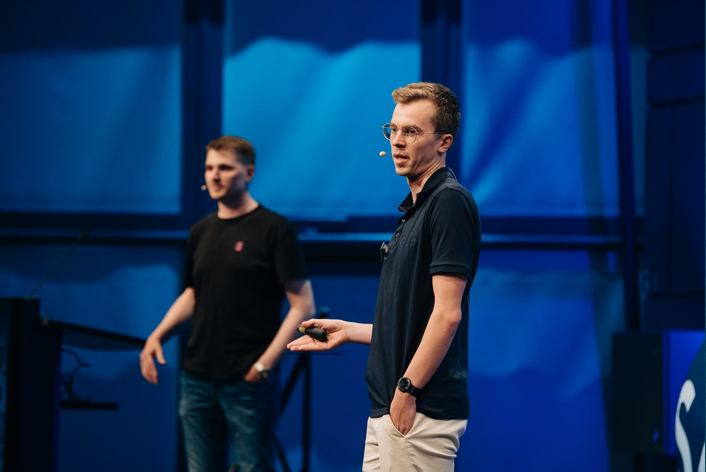
SAP_ARCH Henning Sanders on stage at DSAG presenting the SAP architecture
Henning · DSAG
Case Study

From legacy ERP to cloud architecture.

The client, a leading sports retailer, came from a heavily customised ERP system that had carried all business logic for years. The high degree of customisation made updates practically impossible, and much of the knowledge existed only in the heads of individual employees.

The strategic decision: a complete move to SAP, with the latest products in backend and frontend. To introduce Order Management Foundation, OMSA, Integration Suite and S/4HANA in a structured way and without major complications, we first connected the new frontend to the old backend world and then replaced it step by step with the new one. The result: a smooth, well-controlled transition.

At the same time, logic was consistently moved out of the ERP into the cloud systems, for a lean, maintainable clean-core setup. Today both the approach and the architecture serve as an SAP reference, presented at the DSAG Annual Congress and ESUG Onsite.

Fig. 01 · Order-to-Cash Reference Architecture Live in production
Sourcing Sourcing Activation Emails Order-related emails Customer order updates To-dos for Customer Service Status updates Orders Authorisation Payment captures or refunds Shipment tracking and return registration Orders + status exchange SAP OMSA SAP Emarsys SAP CDP SAP Service Cloud SAP OMF Webshops / Apps / Marketplaces Payment Service Provider ParcelLab Legacy ERP SAP S/4 Dropshipper SAP system Non-SAP system
Order lifecycle · swipe through
SAP system Non-SAP
01 / 05

Order capture

Auth Order Sourcing Channel Web · App · Marketplace PSP OMSA SAP OMF

Orders can come from any channel: web shop, app or marketplace. Sourcing runs via OMSA, payment authorisation goes directly from the channel to the PSP. Once complete, the channel hands the order to OMF; if sourcing is missing, OMF takes care of it.

02 / 05

Customer communication

Emails Profile new sales channel no own interfaces SAP OMF Emarsys Order confirmation SAP CDP Customer profile

All CX components are controlled centrally from OMF: order-related emails such as the confirmation via Emarsys, profile updates into the CDP. So there is only one place where an update happens, and new sales channels no longer need their own interfaces to these systems; they simply connect to OMF.

03 / 05

Orchestration

Rules SAP OMF Legacy ERP SAP S/4 HANA Drop- shipper

OMF decides rule-based which ERP an order is orchestrated to. This makes the setup extremely flexible: ERP systems can be replaced or added without touching the surrounding processes.

04 / 05

Status updates

ERP Lifecycle PSP Payment status ParcelLab Shipping status SAP OMF Full view Emarsys Customer emails SAP CDP Push Service Cloud on errors

All lifecycle updates come together in OMF: shipping status from ParcelLab, payment status from the PSP, further events from the ERP systems. OMF is therefore the central place for the full overview. Customer notifications go out via Emarsys, updates flow into the CDP, and errors end up as tickets in Service Cloud.

05 / 05

Shipping & returns

Tracking Return Refund ParcelLab Tracking · returns SAP OMF ERP Return order PSP Refund

Outbound deliveries are tracked and returns registered via ParcelLab. OMF creates the return order in the right ERP and, after the credit memo, calls the PSP again to trigger the refund.

Live in production at a leading sports retailer, presented by SAP as a reference (DSAG Annual Congress & ESUG Onsite). 👆 Click the arrows for details
Benefits of the architecture
FIELD_02 Henning Sanders presenting the architecture
01

Clean core: logic out of the ERP

A lot of business logic is moved out of the ERP into the cloud systems. The ERP stays lean and therefore much easier to maintain, release-ready and upgradeable.

02

New frontend channels in minutes

New web shops, apps or marketplaces only need to be connected to OMF; all downstream logic is controlled centrally from there. That makes connecting new channels very easy.

03

Interchangeable ERP systems

Because OMF holds the central logic, ERP systems can be replaced without touching the orchestration. New drop-shippers or a new ERP can be connected quickly.

04

Full order overview in SAP OMF

The order-to-refund process involves many systems, some without direct access, such as a drop-shipper's ERP. Keeping the full picture of an order is therefore difficult, but essential: for supporting customer inquiries and for a consistent CX journey. OMF acts as the central collection point for all updates from ERP systems, carriers and payment service providers, and makes the complete order status visible in one single place.

Stuck in a legacy landscape?

Let's talk about your path to the cloud.